18K, 22K and 24K Gold: Purity, Value & Which Is Best
Date of Published: November 18, 2025
Table of Contents
- Introduction
- Understanding Karat and Purity
• 24K Gold
• 22K Gold
• 18K Gold - How Karat Influences the Price You Receive
- Is Broken or Damaged Gold Valuable?
- What Type of Gold Can Be Sold Clearly
- Why Intact Gold Ensures Clear Valuation
- Final Note
When you plan to sell gold, understanding purity becomes essential. Most jewellery in India is made in 24K, 22K or 18K and each karat reflects how much pure gold the item contains. Since buyers calculate value based on purity, weight, and the live market rate, knowing these basics helps you make clear, confident decisions when selling. This becomes especially useful when comparing the difference between 22K, 24K, and 18K gold or when seeking a simple gold karat comparison before approaching old gold buyers in India.
This guide explains how each karat works, how purity affects resale value and why broken or damaged gold is usually not considered suitable for buying.
Understanding Karat and Purity
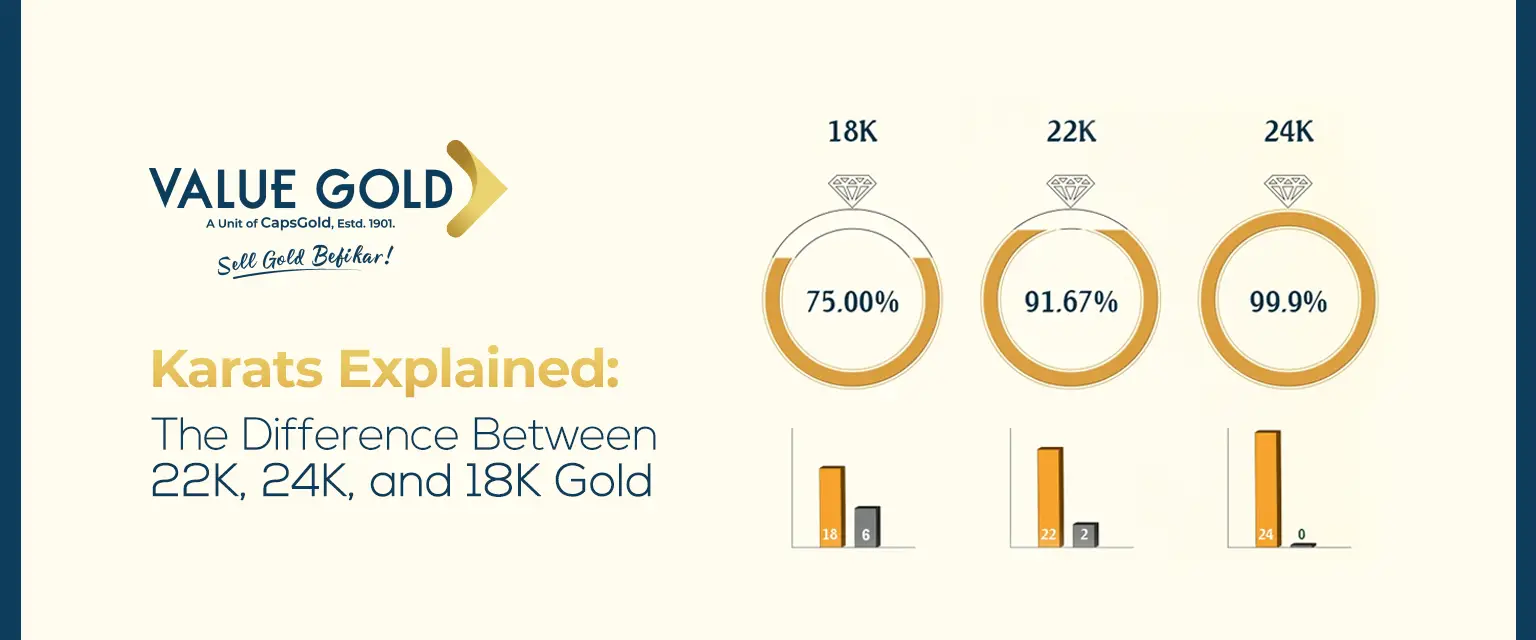
Karat indicates the proportion of pure gold within an item. Higher karat means higher purity, which directly influences gold price according to karat.
24K Gold
24K gold is almost pure and is mainly used for coins and bars. Since the purity is highest, the resale rate per gram is also the highest. It is not commonly used for daily wear jewellery because it is soft.
22K Gold
22K contains 91.67 percent gold. It is the most widely used purity level for jewellery in India. Even with a hallmark, buyers still test the purity during resale to ensure the value is calculated accurately.
18K Gold
18K contains 75 percent gold and is mixed with alloy metals for added strength. Although the purity is lower compared to 22K and 24K, it still carries reliable value when the item is intact.
How Karat Influences the Price You Receive
Gold value is determined by three straightforward factors:
- Purity reading
- Net gold weight
- Live market rate
Once purity and weight are established, the current rate for that karat is applied. This transparent process helps sellers understand exactly how their return is calculated. Having clarity about the gold price according to karat helps you set the right expectations before selling.
Is Broken or Damaged Gold Valuable?
Many sellers assume that any gold item, even if broken, will hold the same value. In reality, most buyers do not consider broken or heavily damaged gold suitable for buying. This affects the overall value of broken gold in the resale market.
When a chain is snapped, a bangle is crushed or a pendant has missing sections, the original structure of the jewellery is compromised. This makes it difficult to identify the gold content clearly. Missing or distorted parts also change the weight, and the item no longer reflects its original form. Because of this, broken gold is generally not accepted by buyers, and selling damaged gold in India becomes difficult for many households.
Most professional and trusted gold buyers prefer jewellery that is intact and complete, as this allows purity and weight to be checked clearly. As a result, broken or incomplete pieces are often set aside because they cannot be processed or valued with confidence.
What Type of Gold Can Be Sold Clearly?
Gold items that can be evaluated properly typically include:
- Intact jewellery
- Coins
- Bars
- Hallmarked pieces
- Complete items without missing sections
These items allow buyers to carry out the process clearly and offer a transparent price.
Why Intact Gold Ensures Clear Valuation
A complete and undamaged piece allows a stable reading of purity and an accurate measurement of weight. When the jewellery is in one piece, the seller receives a value that is transparent and based on clear testing. This is why many old gold buyers in India accept only jewellery that maintains its proper structure.
Final Note
Understanding the difference between 22K, 24K and 18K gold helps you recognise how purity shapes the resale value. Knowing why broken pieces are not considered suitable also helps you avoid uncertainty when preparing to sell. When your jewellery is intact and testable, you receive a clear value based on purity, weight and the live rate.
For a straightforward and reliable selling experience, Value Gold offers transparent guidance and support at every step.
Related Blogs
How to Avoid Scams When Selling Gold: A Seller’s Guide
Table of Contents Introduction Understanding the Risks Choosing Verified Gold Buyers Safe Gold Valuation Methods How to Identify Fake Gold Buyers Safe Gold Selling Tips Tracking Gold Prices and Market…
Read More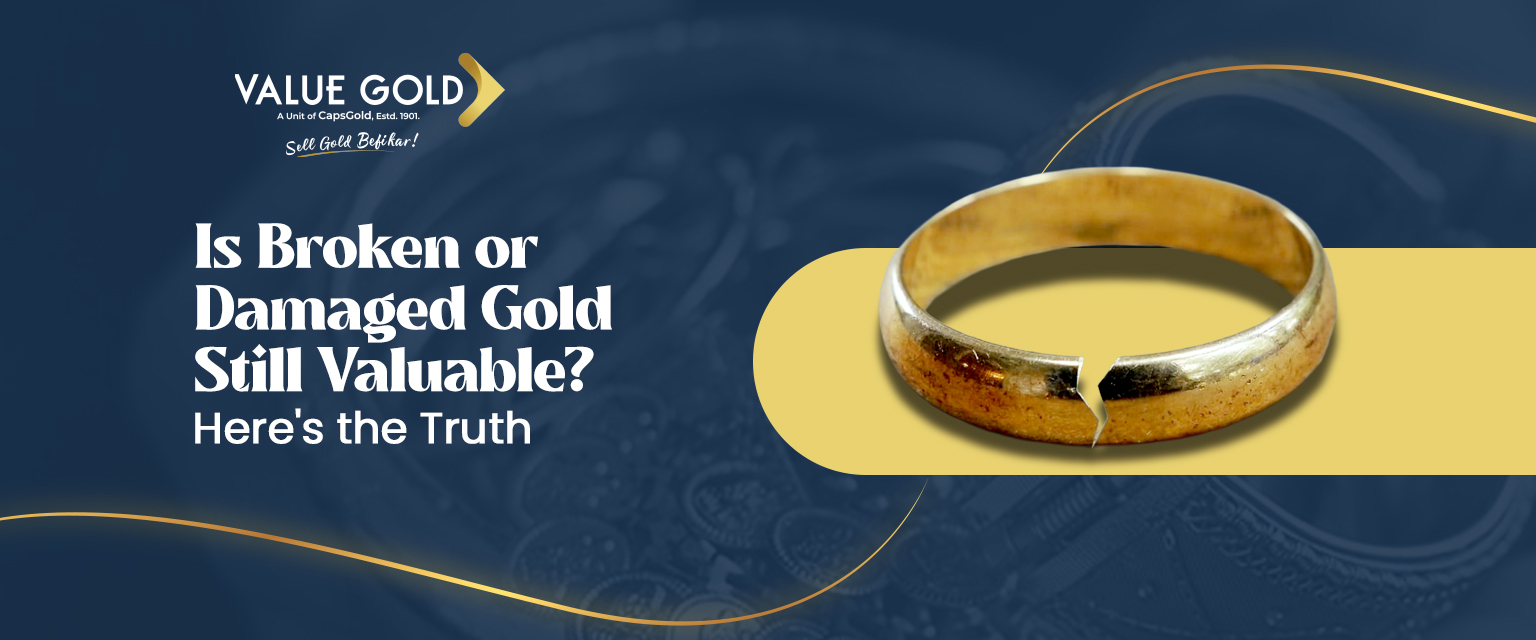
Is Broken or Damaged Gold Still Valuable? Here’s the Truth.
We’ve all been there, discovering that a cherished gold chain has snapped, a ring is bent out of shape, or a lone earring has no match. The immediate thought is…
Read More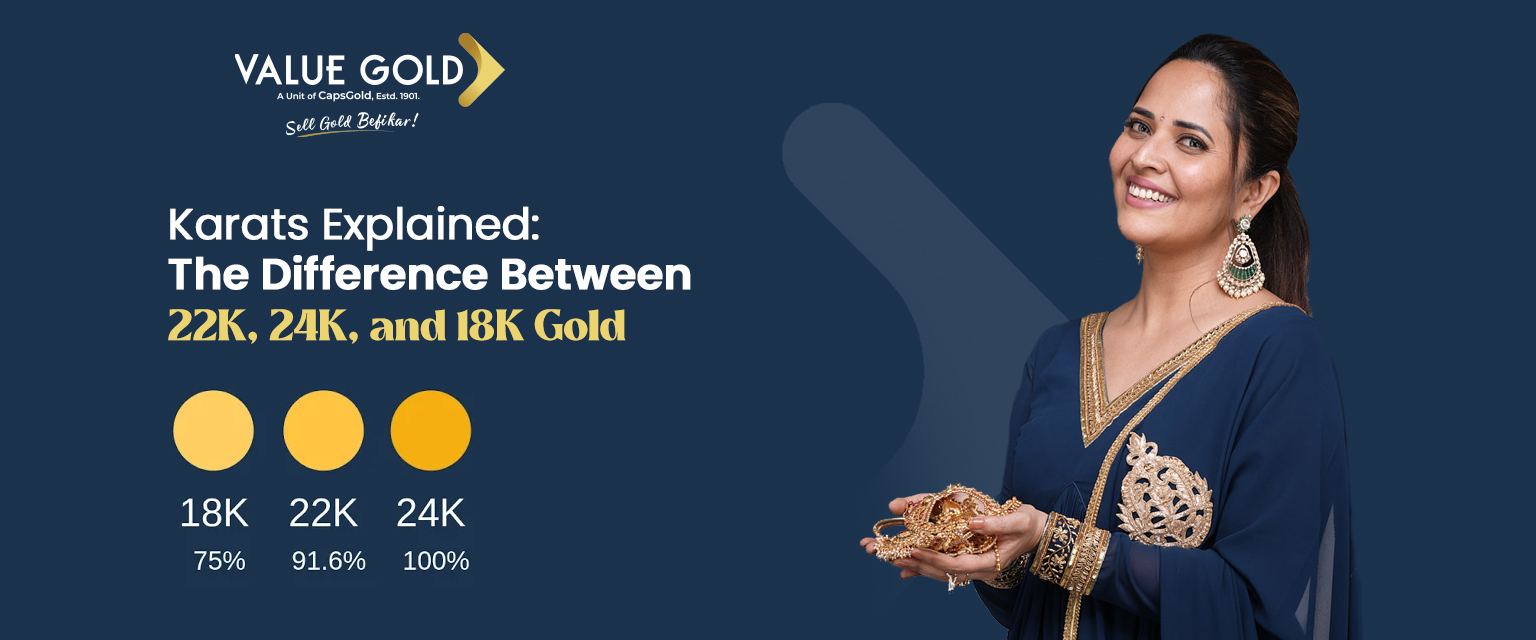
Karats Explained: The Difference Between 22K, 24K, and 18K Gold
Understanding Gold Karats Before You Buy or Sell Gold has always been more than just a precious metal. It’s an emotion, an investment, and often, a safety net in times…
Read More
How Gold Selling Became Part of Women’s Financial Independence
Gold has always been deeply intertwined with Indian womanhood, symbolizing prosperity, security, and affection. For generations, it has served as a woman’s private reserve of wealth, offering both pride and…
Read More
